 Technology
Enhancement
Technology
Enhancement
In
terms of the literacy instruction and classroom design, literature circles
are a way for students to share reading experiences.
Integrating the internet into the classroom can
extend the literature circle by providing a worldwide audience for
sharing, along with resources for better understanding the literature and
using the technology tools to assist students in accessing, organizing,
analyzing, and communicating their approaches to essential questions (Lamb
& Smith 1999).
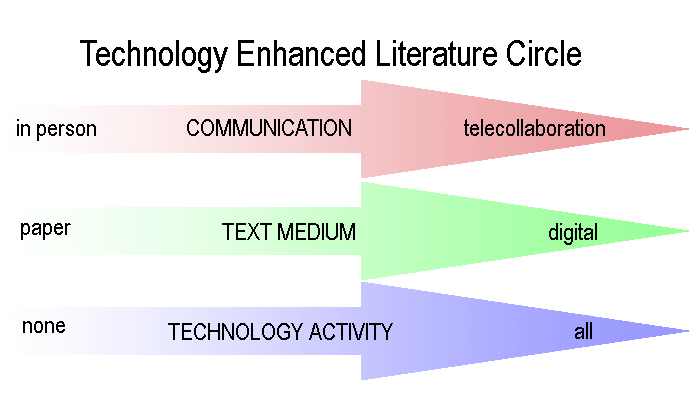
technology integration continuum
Teachers can integrate technology
into the literature circle along any of three facets:
-
communication between students;
-
the text material; and (For more information on text materials
visit
www.drscavanaugh.org/ebooks/ )
-
the student activities.
The range
for communication goes from members participating in person in class, to a
student who participates though telecommunications perhaps as a
hospital/homebound student, to interactions through telecommunications
between the in person class and different classes or grade levels, to a
distance learning situation, where all the students communicate through
telecommunications. The text material used for the literature circle can
range from paper based text, to paper text with digital enhancements or
versions, to fully digital text, such as eBooks. For the activities
students can participate with just the paper and pencils that they have to
integrating activities that use technology such as search engines, paint
programs, concept mapping software or web sites, digital recording, and
chat software. These technology activities can range from having no
technology activities, to using just a few activities, such as for a one
computer classroom where students would need to take turns, to having all
activities integrate technology where students have one-to-one computer
access.
Using this technology enhanced literature circle
approach students working in groups have experiences in all six Technology
Foundation Standards for Students from the ISTE NETS:
- Basic operations and concepts
- Social, ethical, and human
issues
- Technology productivity tools
- Technology communications
tools
- Technology research tools
- Technology problem-solving
and decision-making tools (ISTE 2000)
Technology Resources
The following are examples of the software (common or
free) appropriate for student use with the different technology integrated
roles: