Animations

How to use a Digital Camera
Recording
With most phone digital cameras, taking pictures is just point the camera, look at the screen and push the shutter button. The phone's LCD screens let you see the image before you shoot and allow you to delete pictures you don’t want, saving you time, effort, and camera memory. Digital camera memory limits vary and may be supplemented with memory cards or specialty storage disks.
All cameras have some kind of delete feature, which may allow you to delete selected images, or may require that the entire memory must be deleted. Some cameras allow images from the computer screen to saved as digital photos for use in print or video applications.
Viewing
Phone based digital cameras allow you to actually view the pictures taken with built in LCD screens, without having to connect to an outside viewing medium. Digital cameras then can be connected and the picture files downloaded to a computer. The phone usually connects the camera to the computer using a USB ports, although you can also send images using wifi or other wireless options. , and some connect directly into a computer slot. New cameras store directly on floppy disks or cards that use floppy disk adapters.
Certain mobile device digital cameras have video output that allow the camera to send out an NTSC or PAL video signal directly through a standard RGB cable to a television, projector or VCR.
Saving
All digital cameras save pictures in a digital file format, which may be camera specific or standardized, such as PNG or JPEG. The format that pictures are saved in will determine the amount of disk space needed to save a picture. Picture files can be converted using a graphics program.
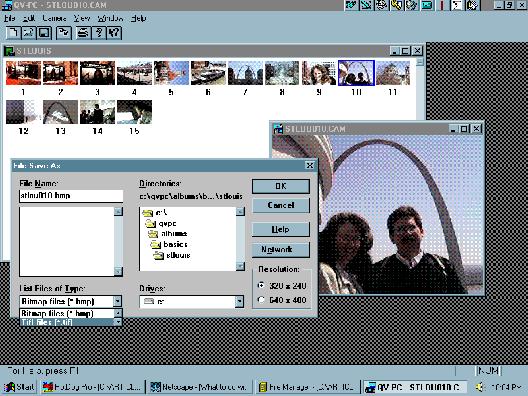
If the camera has the ability to output a video signal, video files can be used to show or archive your pictures.
Using your computer, you can print out your images. If you want to make good prints I suggest that you use either a laser or inkjet printer. New print cartridges, glossy paper, and iron on transfers are available for printing photos with inkjet printers.
Applications
- Once you have your images in your phone or computer, they can be e-mailed as attachments.
- Your images can be incorporated into print media, such as posters, signs, reports, banners, certificates, and any other publishable print document.
- Iron on transfers allow images to be printed on items such as T-shirts, aprons, banners, flags, etc.
- Images can be added to word-processing documents and presentations.
- Images can also be included on websites, social networks, and blogs. Images should be converted into PNG, GIF or JPEG format for interenet use.
Accessory Equipment
Almost any printer can print images, but for the best quality, use a high resolution ink jet or laser printer. Currently there are printers and/or printing accessories specifically designed for printing pictures. To print high quality "photo style" images you should use a printer that can take a photo quality ink cartridge and print onto glossy or semi-gloss paper.
Most mobile device cameras include their own cables to connect to either a PC or Mac computer, and some include the cables for direct video output. It is possible that you will need to purchase cables, but it is also possible to build your own, with a little work.
Most mobile device cameras include some kind of basic image handling software. Depending on the software, capabilities may be as simple as view and save or may have numerous picture editing capabilities. Pictures can always be used with the popular graphics and imaging software programs, such as PhotoShop, Picasa or GIMP.
High resolution images are often large files and saving them can take up a lot of your disk space. It is possible to save the images in compressed formats like JPEG or GIF, and save disk room. If you plan to save lots of images, an external drive is recommended.